Design & Tests
Every ASCALON propeller is shaped by proprietary software, then proven on real engines, real aircraft, and dedicated in-house test rigs — not adapted from generic designs or theoretical figures alone.
LUKY: propeller design by evolutionary algorithm
LUKY is E-Props' proprietary design software, combining lifting-line aerodynamic modeling with an evolutionary algorithm to shape blade profiles. Rather than adapting a generic propeller to a new engine, LUKY optimizes the blade specifically for the target engine, aircraft and mission profile.
- Method
- Evolutionary algorithm
- Model
- Lifting-line aerodynamics
- Objective
- Multi-objective optimization
- Output
- Installation-specific blade design
ELIAS: a personalized vibration survey for every ASCALON
Your ASCALON propeller is engineered for your engine — not for a generic one. Because every installation is unique, E-Props performs a personalized vibration survey for you. This is a rare service in light aviation, and it is included with the delivery of your propeller.
Two engines of the same model — same manufacturer, same displacement — do not produce identical vibrations. Every installation exhibits resonance conditions: specific RPM ranges where engine excitation frequencies align with the natural frequencies of the propeller, sharply increasing alternating stresses with no perceptible warning to the pilot. Vibration analysis maps these conditions for your specific installation and confirms they fall outside the RPM ranges you normally operate in.
Static Ground Test
Your ASCALON is delivered with an ELIAS-equipped spacer — an onboard data-acquisition system integrated between the engine flange and the propeller hub. You run a progressive RPM sweep on the ground; ELIAS records vibration, blade strain and RPM automatically, and you send the data file to E-Props by email.
Delivery of Your Definitive Spacer
If your installation is optimal — the most common outcome — E-Props ships your definitive spacer, ready to install. If a resonance condition needs repositioning, E-Props ships a corrected propeller directly, with no further testing required on your end.
Historical reference: Hartzell vibration campaigns
Hartzell Propeller's extensive propeller-engine vibration compatibility testing on Lycoming and Continental engines — documented in Hartzell Technical Manual 193 — identified numerous resonance phenomena and led to the restricted RPM ranges (yellow/red tachometer arcs) found on many certificated aircraft today.
E-Props applies this same engineering rigor to every individual installation, extending it for the first time to each customer's specific engine with modern, compact electronic instrumentation.
Two test aircraft. Two in-house test benches.
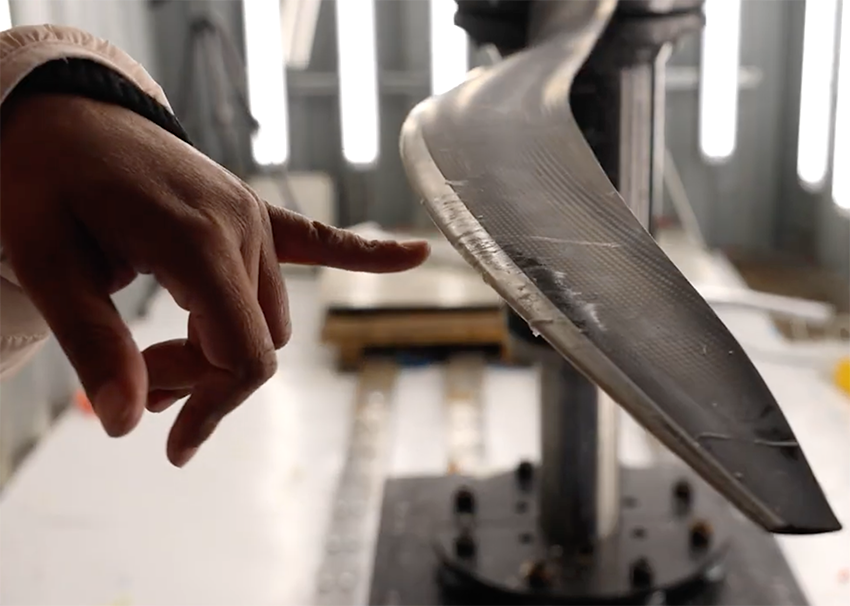
Very few propeller manufacturers of E-Props' size operate their own flight-test aircraft, a bird-strike cannon, and a dedicated vibration bench. For ASCALON, that means every design choice is proven beyond bench calculations — in real flight, and under real impact and vibration testing.
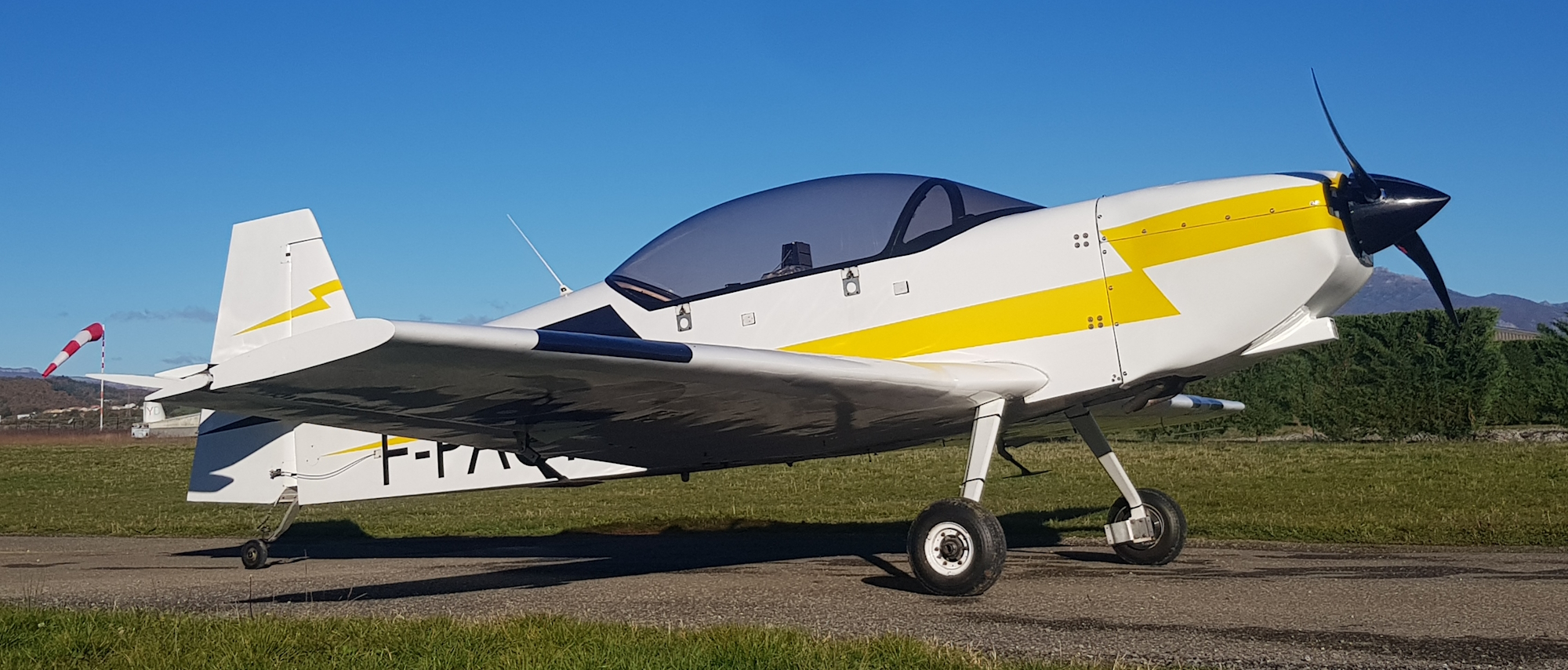
Pena Bilouis — ASCALON-2
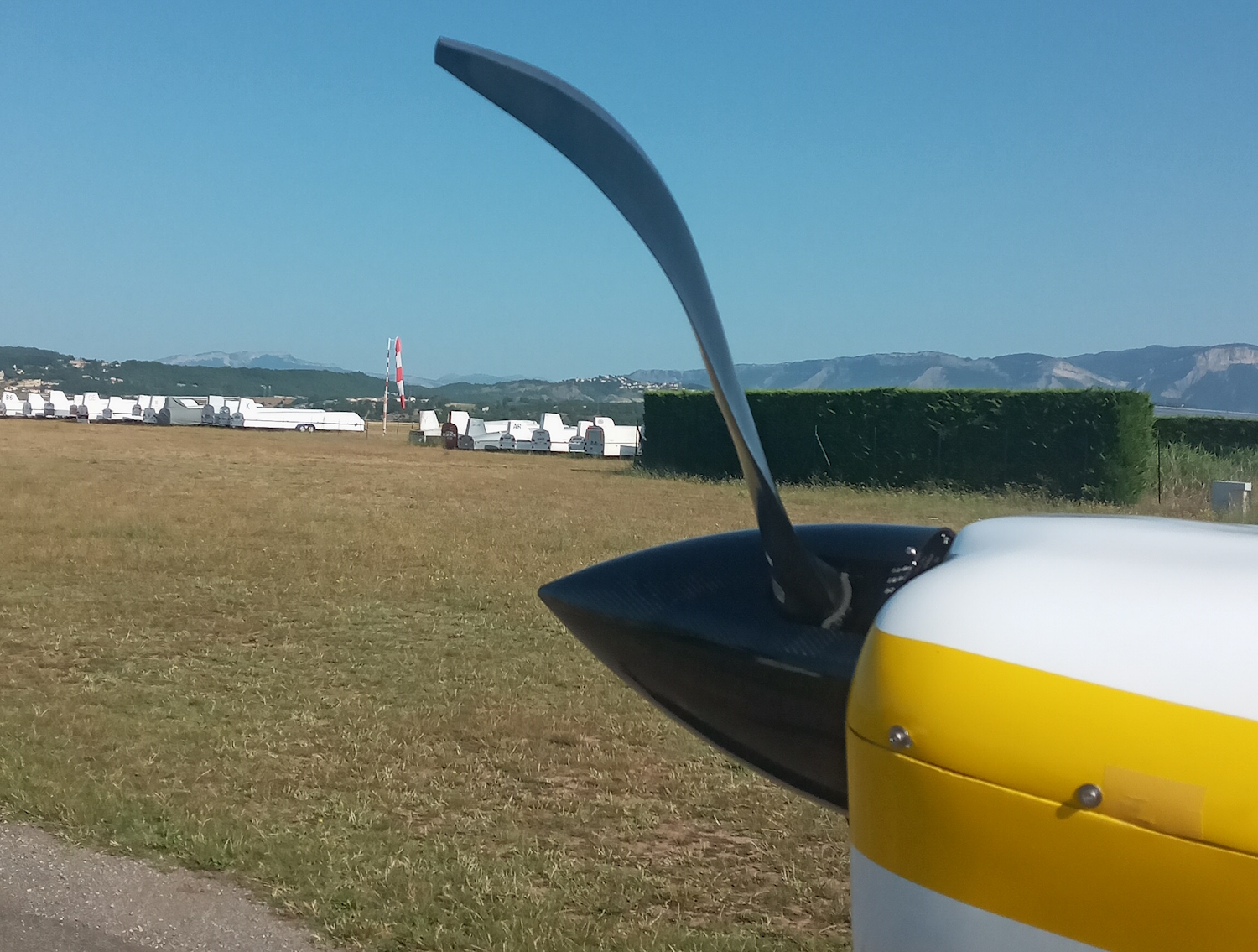
The yellow Pena Bilouis flies the two-blade ASCALON-2, evaluating efficiency, responsiveness and light weight on a powerful four-cylinder Lycoming engine.
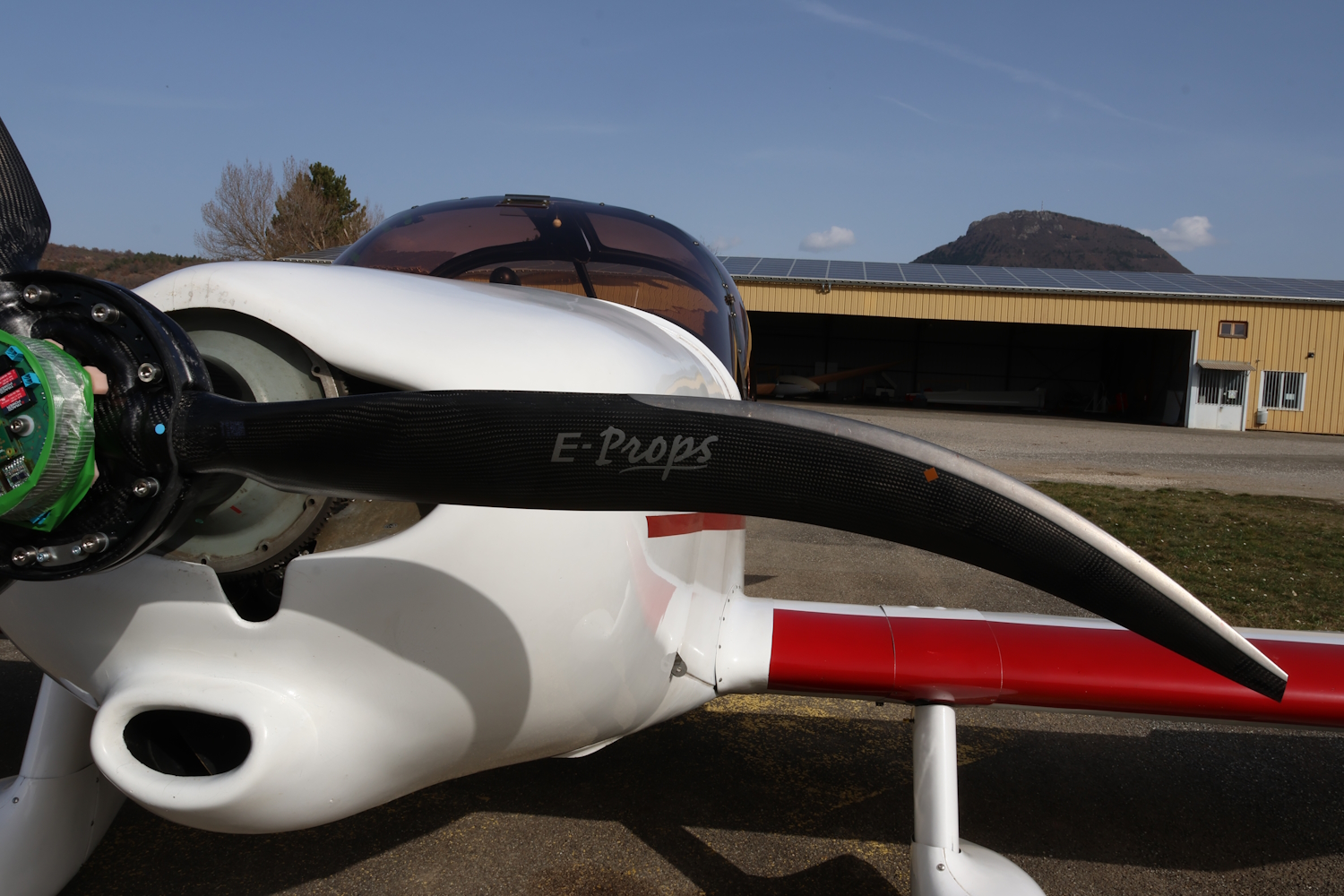
Jodel DR1054 — ASCALON-3
The red Jodel DR1054 flies the three-blade ASCALON-3, studying smoothness, acoustic comfort and thrust across a wide operating envelope.
Both aircraft are based at Sisteron airfield, right next to the E-Props workshop — allowing the design office to design, manufacture, install, fly, measure and improve, all in one place.
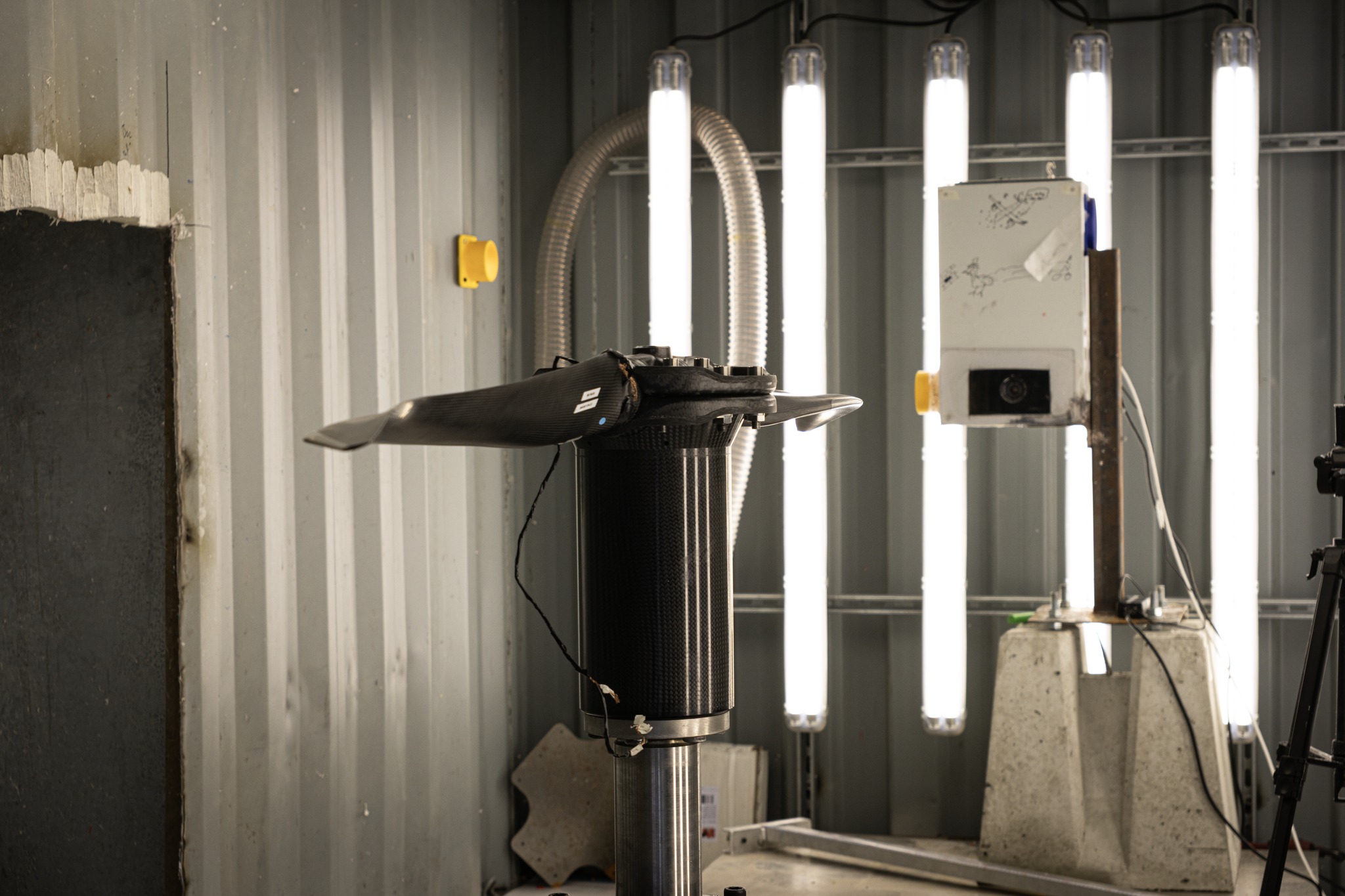
Bird-Strike Test Bench
Designed and built in-house, this rig performs bird-strike impact testing as part of the ASCALON EASA Type Certificate validation campaign — a very rare capability for a propeller manufacturer of E-Props' size.
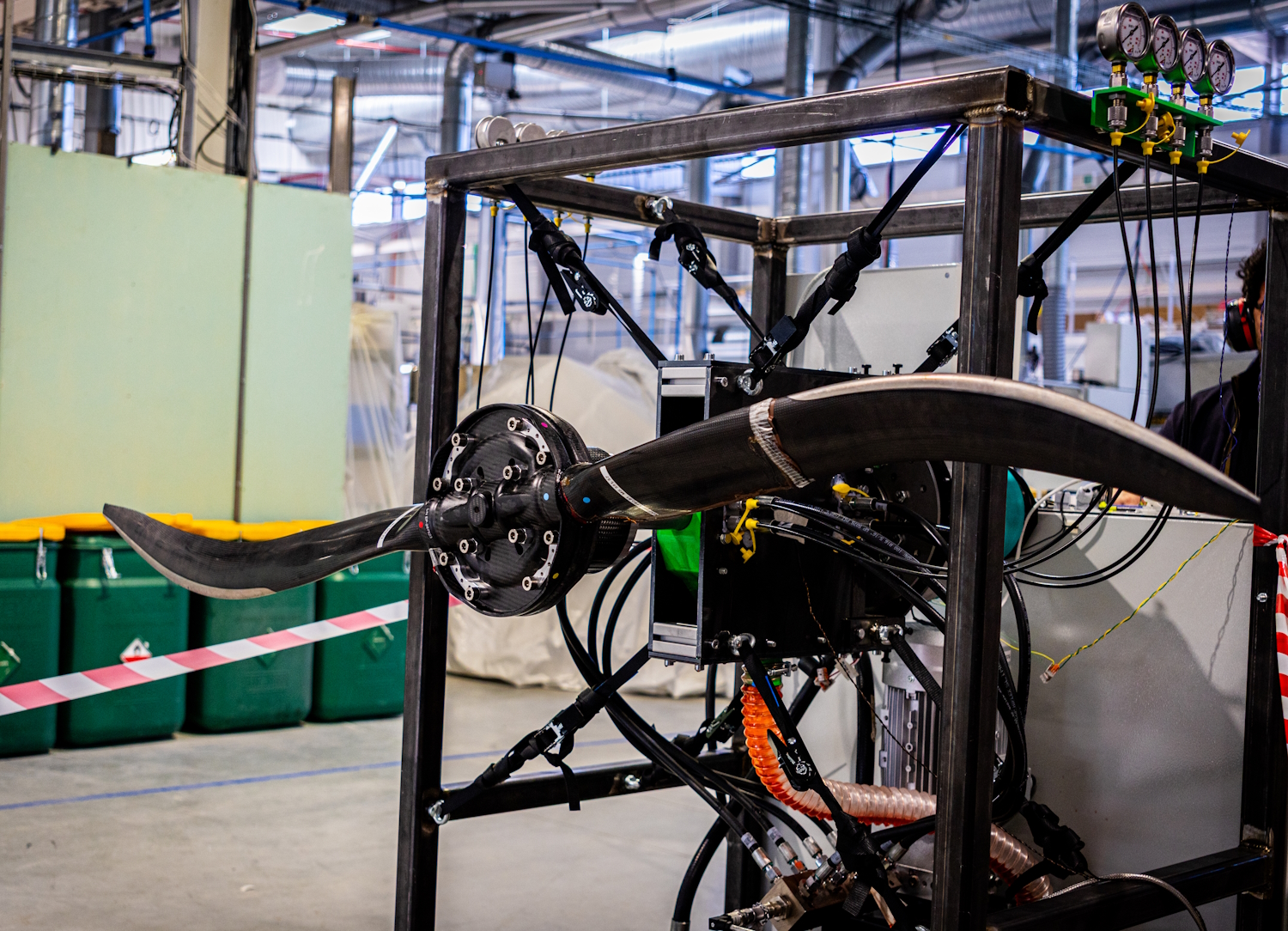
RESONATOR
RESONATOR tests prototype propellers at very high frequencies to define safety margins during development, and checks every propeller before delivery to confirm its vibratory ranges are within tolerance.
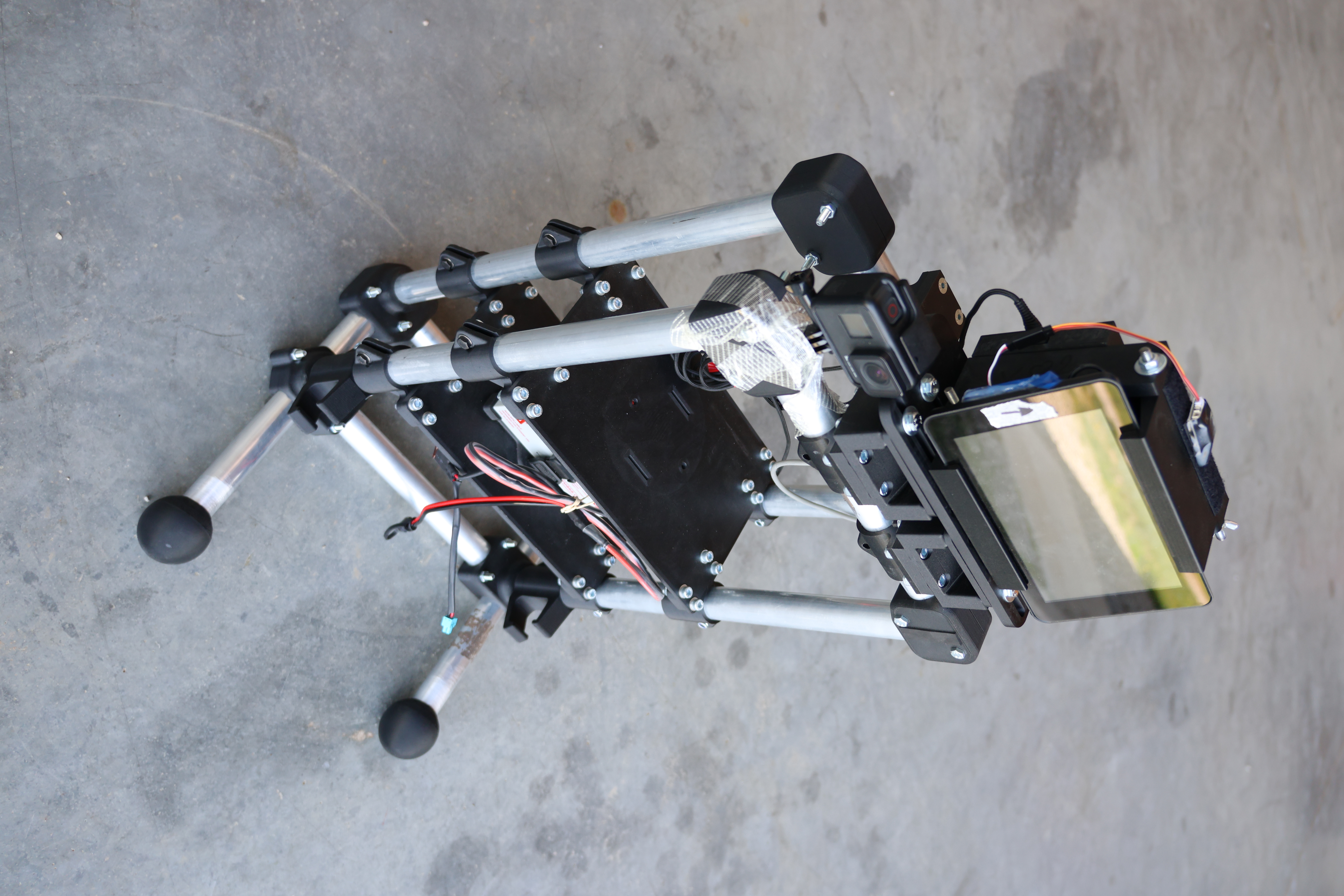
BOB
ELIAS plus an extended recording setup, used for E-Props' own instrumented flight-test campaigns — compact enough to move quickly between the Pena Bilouis and the Jodel DR1054.